 Google Workspace
 Zoho Mail
 Zoho Workplace
 Adobe Solutions
 Zoom Solutions
Why Hosting Choice Matters in 2026
Your hosting provider is the backbone of your website. In 2026, when every click counts, the hosting you choose can determine whether your site loads in 1 second or 10, whether it can handle festival traffic spikes or crashes when you need it most, and whether customers trust your brand or abandon it for a competitor.
For businesses in Nepal, this decision is even more critical. With internet usage above 90% penetration (NTA, 2025) and e-commerce booming, a fast, reliable, and scalable hosting solution is no longer optional—it’s the key to staying competitive.
But here’s the challenge: when you search for hosting, you’ll see terms like Shared Hosting, VPS Hosting, and Cloud Hosting everywhere. What do they actually mean? And which one is right for your business in Nepal?
What Is Shared Hosting?
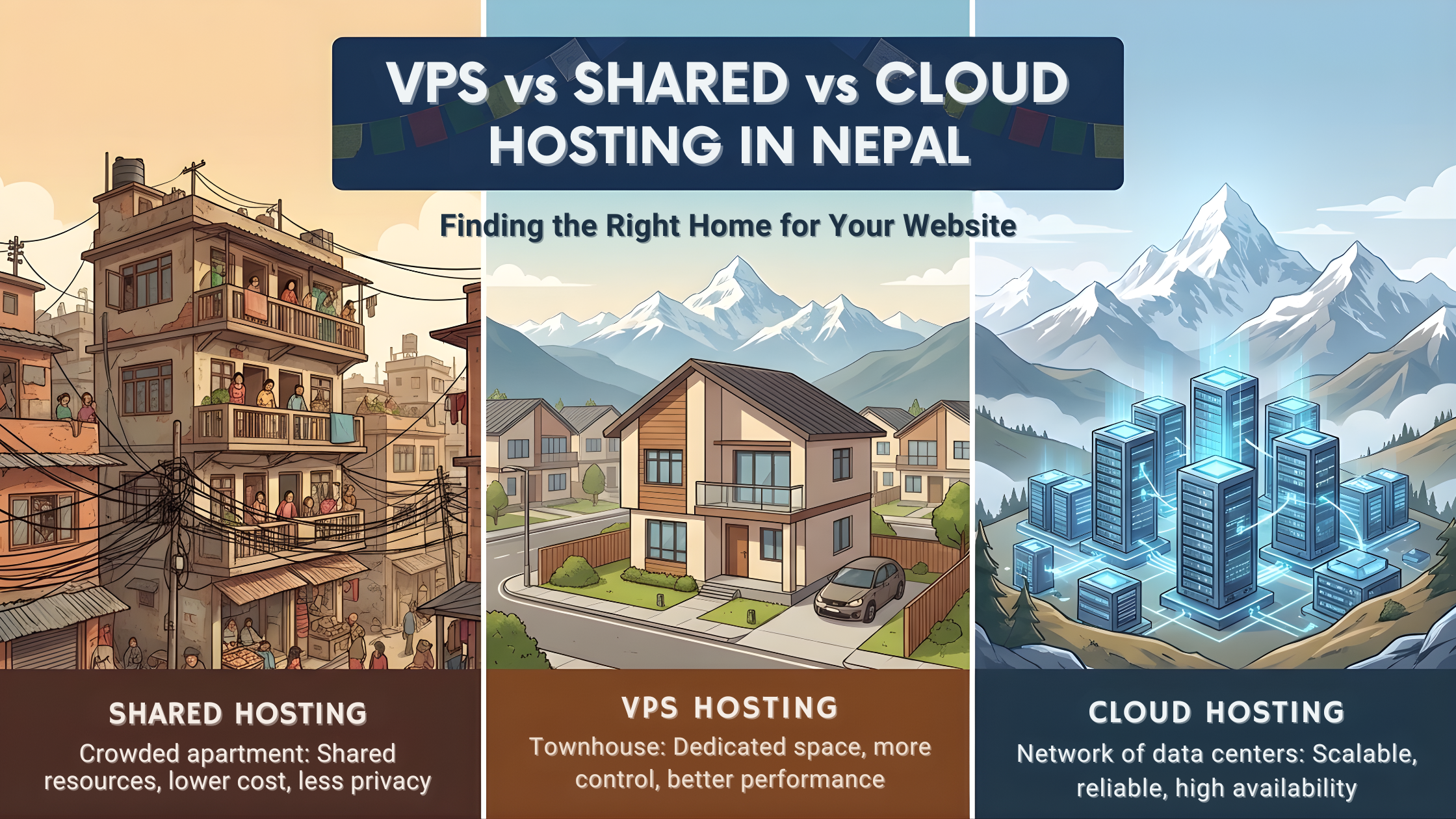
Shared hosting is the most basic and affordable hosting option. Think of it like renting an apartment where you share the building with dozens of other tenants.
How it works: Multiple websites share the same server resources (CPU, RAM, bandwidth).
Pros: Cheapest option, easy setup, suitable for beginners.
Cons: Limited performance, slower speeds during high traffic, security risks if one site is compromised.
👉 In Nepal, shared hosting is often the entry point for small blogs, portfolio sites, or startups with very limited traffic.
What is VPS Hosting?
VPS (Virtual Private Server) hosting is the middle ground between shared and dedicated servers. Imagine living in a building where you have your own private apartment—still in the same structure, but with more independence.
How it works: A single server is divided into multiple virtual environments, each with dedicated resources.
Pros: Better performance, customizable environment, stronger security.
Cons: More expensive than shared hosting, requires some technical knowledge.
👉 In Nepal, VPS hosting is ideal for growing businesses, agencies, or e-commerce stores that need more stability than shared hosting but aren’t ready for full cloud scalability.
What is Cloud Hosting?
Cloud hosting is the future. Instead of relying on a single physical server, your website runs on a network of interconnected servers (the cloud).
How it works: Resources are distributed across multiple servers, ensuring redundancy and high uptime.
Pros: Highly scalable, reliable, can handle sudden traffic spikes, and pay-as-you-go pricing.
Cons: Slightly higher cost, but worth it for performance and growth.
👉 In Nepal, cloud hosting is becoming the go-to solution for fast-growing startups, e-commerce businesses, fintech companies, and enterprises that demand reliability and uptime during high-traffic seasons like Dashain and Tihar.
Why Hosting Choice Matters More in Nepal?
Choosing the wrong hosting type can hurt Nepali businesses in ways that international providers often don’t account for:
- Latency Issues: Hosting in Singapore or the US means slower load times for Nepali users.
- Forex Fees: Paying in USD adds conversion costs and exchange rate risks.
- Festival Downtime: During Dashain or Tihar, traffic spikes often overwhelm shared or offshore servers.
- Support Gaps: International providers don’t operate in Nepali business hours, leaving you waiting when your site goes down.
That’s why choosing the right hosting type—shared, VPS, or cloud—in Nepal is essential for 2026.
Shared Vs VPS Vs Cloud Hosting: Which is Right for You?
Now that we understand the basics, let’s compare these three hosting types side by side.
1. Shared Hosting in Nepal
Shared hosting is the entry-level option, perfect for beginners who want a cheaper way to get a site online.
Best to: Personal blogs, portfolio sites, small static websites.
Pros: Affordable, easy setup, beginner-friendly.
Cons: Slow during traffic spikes, limited resources, and higher security risks.
Price range in Nepal: NPR 1,500 – 3,500 per year (varies by provider).
👉 If you’re experimenting or starting a small blog, shared hosting is fine. But for businesses, it’s usually too limited.
2. VPS Hosting in Nepal
VPS hosting offers more control, power, and reliability compared to shared hosting.
Best for: Small-to-medium businesses, growing e-commerce stores, and agencies.
Pros: Dedicated resources, better performance, customizable.
Cons: Slightly technical, higher cost than shared.
Price range in Nepal: NPR 8,000 – 20,000 per year, depending on specs.
👉 VPS hosting is better for businesses, searching for a balance of affordability and performance.
3. Cloud Hosting in Nepal
Cloud hosting is the most advanced, future-proof option.
Best for: Fast-growing startups, e-commerce, enterprises, and fintech.
Pros: Scalable, highly reliable, zero downtime, and can handle heavy traffic.
Cons: Costs more, but delivers unmatched performance.
Price range in Nepal: NPR 10,000+ per year, scaling with usage.
👉 Cloud hosting is the best option for businesses serious about growth and uptime.
Comparison Table: Shared vs VPS vs Cloud Hosting
| Feature | Shared Hosting | VPS Hosting | Cloud Hosting |
| Speed | Slow during high traffic | Faster, Stable | Fastest, Scalable |
| Resources | Shared with many users | Dedicated Virtual Slice | Pooled from multiple servers |
| Security | Lower(depend on others) | Stronger, Isolated | Very Strong, Redudancy |
| Scalability | None | Limited | Unlimited |
| Cost | Low | Mid-Range | Flexible, Usage based |
| Best For | Beginners, blogs | SMEs, Agencies | Flexible, usage-based, high traffic |
Foxnett: The #1 Hosting Provider in Nepal (2026)
Now that we know the pros and cons, the question is: where should you host your website in Nepal?
This is where Foxnett stands out. Unlike generic international providers, Foxnett offers a full range of Nepal-optimized hosting solutions:
- Shared Hosting → Affordable entry plans for individuals and startups.
- VPS Hosting → Dedicated performance for SMEs and growing businesses.
- Cloud Hosting → Scalable, enterprise-grade infrastructure built for Nepal’s digital future.
- Managed WordPress Hosting → Perfect for bloggers, agencies, and businesses using WordPress.
- Specialized Hosting (Python, Node.js, Django) → Ideal for developers and startups building modern applications.
- Cheapest Domain Registration in Nepal → Save money from the start.
- Free Migration→ Foxnett handles everything: DNS, SSL, database transfer, with zero downtime.
Case Study: Scaling With Foxnett
A Kathmandu-based digital marketing agency started on shared hosting in 2020. As their client base grew, they ran into problems:
- Frequent downtime during traffic spikes
- Slow response times from offshore hosts
- Rising costs due to foreign exchange payments
In 2023, they upgraded to Foxnett VPS Hosting, which stabilized performance and gave them more control. By 2024, as their clients expanded into e-commerce, they migrated again — this time to Foxnett Cloud Hosting.
The results?
- 50% faster load times (tested on GTmetrix)
- Zero downtime during Dashain and Tihar 2024
- 30% cost savings compared to international hosting due to NPR pricing
Today, they manage 50+ client websites, with the peace of mind that Foxnett scales as they scale up.
How to Choose the Right Hosting in Nepal (2026 Guide)
The right hosting depends on where you are in your business journey:
If you’re starting → Go with Shared Hosting. It’s affordable and simple for small blogs, portfolios, or testing projects.
If your business is growing, → Choose VPS Hosting. It gives you stability, performance, and control at a reasonable price.
If you’re scaling fast or running an e-commerce → Invest in Cloud Hosting. It’s the most reliable and future-proof option, perfect for handling Nepal’s high festival traffic seasons.
👉 The key is to start where you are, but plan. Migration is easier when you choose a provider like Foxnett, which offers all three options under one roof — meaning you can upgrade seamlessly as your business grows.
The Smart Hosting Choice for Nepal in 2026
In Nepal’s growing digital economy, your hosting choice can make or break your business success. Shared hosting works for starters, VPS is perfect for growing businesses, and cloud hosting is the future of scalability.
But whichever you choose, the provider matters just as much as the type of hosting. With Foxnett, you’re not just getting hosting — you’re getting:
- Servers built for Nepal’s internet landscape
- Free, zero-downtime migration
- The cheapest domain registration in Nepal
- Local support that actually understands your needs
👉 Whether you’re starting small or scaling big, Foxnett is Nepal’s #1 choice for hosting in 2026.
Explore Foxnett Hosting Plans Now at Foxnett.com
Frequently Asked Questions (FAQs)
1. Which hosting type is best for small businesses in Nepal?
👉 Shared hosting is enough for small websites with low traffic. But for long-term stability, VPS hosting is usually the smarter choice.
2. Is cloud hosting really necessary for Nepali businesses?
👉 Not for everyone. But if your website gets heavy traffic (e.g., e-commerce, fintech, agencies), cloud hosting ensures speed, uptime, and scalability.
3. How does Foxnett make hosting better in Nepal?
👉 Foxnett offers servers inside Nepal, free migration, cheapest domain registration, and 24/7 local support in Nepali business hours — solving the biggest issues with offshore providers.
4. Isn’t VPS hosting too technical for beginners?
👉 Not with Foxnett. Their VPS plans come with managed services, meaning the technical side is handled for you, while you focus on your business.
5. How much does hosting cost in Nepal?
- Shared Hosting: NPR 1,500 – 3,500/year
- VPS Hosting: NPR 8,000 – 20,000/year
- Cloud Hosting: NPR 10,000+ per year (scales with use)
Foxnett offers some of the most competitive prices in Nepal with no forex fees.
6. Can I switch from shared to VPS or cloud later?
👉 Yes! With Foxnett’s free migration service, you can upgrade anytime without downtime.